
Cold Foam vs Whipped Cream: Calories Compared (2026)
You’re standing at the Starbucks counter — or scrolling through the app at 8 a.m., barely awake — and the customization screen asks: cold foam or whipped cream?
If you’ve ever just picked one at random and hoped for the best, you’re not alone. Most people assume these are basically the same thing with different names. Spoiler: they’re really not.
One sits light and airy on your cold brew, slowly drifting down as you sip. The other is thick, sweet, and rich — more like a dessert on a drink. The ingredients are different, the calories are different, and honestly, the whole experience is different.
This cold foam vs whipped cream guide covers everything: what each one actually is, how they’re made, how they taste, the calorie truth, which is healthier, how to make cold foam at home, dairy-free options, and the exact situations where each topping shines. By the end, you’ll never just randomly pick one again.
Table of Contents
Cold Foam vs Whipped Cream at a Glance
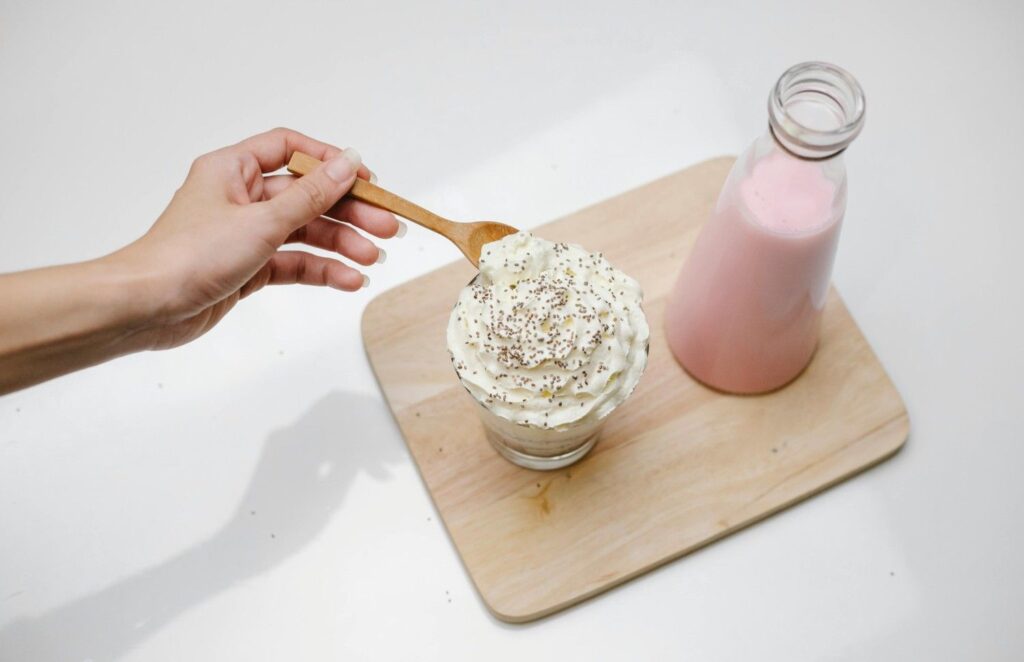
Cold foam = frothed nonfat milk. Light, airy, fewer calories, lower fat, more protein. Best for cold drinks like cold brew and iced coffee. Whipped cream = whipped heavy cream with sugar. Rich, thick, indulgent, higher calories and fat. Best for hot drinks, frappuccinos, and dessert-style coffees.
| Feature | Cold Foam | Whipped Cream |
| Main Ingredient | Nonfat or low-fat milk | Heavy cream |
| Texture | Light, airy, frothy | Thick, fluffy, rich |
| Calories (per serving) | 80–120 kcal | 120–150 kcal |
| Fat | 1–3g | 10–13g |
| Sugar | 8–12g (often sweetened) | 2–4g |
| Protein | 2–4g | Under 1g |
| Temperature | Cold only | Hot or cold |
| Shelf life (homemade) | 2–3 hours | Up to 24 hours |
| Best for | Cold brew, iced lattes | Hot drinks, frappuccinos |
| Dairy-free option | Yes (oat, almond) | Yes (coconut cream) |
What Is Cold Foam, Actually?
Cold foam is one of those things that sounds fancier than it is. At its core, it’s just frothed nonfat milk — blended or whisked at high speed until it becomes thick, creamy, and cloud-like.
No heat involved. That’s the whole point. Unlike the steamed milk foam you’d get on a cappuccino, cold foam is made cold and stays cold. It’s designed to float on top of iced drinks without immediately melting into them.
Starbucks introduced cold foam to the mainstream in the US in 2018, though it had quietly debuted at their Reserve Roastery in Seattle as far back as December 2014. Since then, it’s become a staple — the thing that makes a Cold Brew with Cold Foam feel different from just pouring cream over ice.
The science behind why it works: nonfat milk has high protein content and very little fat. When you whip it fast enough, those proteins trap tiny air bubbles and hold them in place. Fat actually gets in the way of this process — it interferes with bubble formation rather than helping it. That’s why nonfat milk creates better foam than whole milk.
Pro tip: If you’ve ever tried to make cold foam with whole milk and ended up with watery froth that disappeared in 30 seconds, that’s why. Nonfat milk (or a very low-fat option) is what makes the texture hold.
Cold foam has a slightly milky, neutral taste on its own. Without any flavoring, it’s subtle — it adds creaminess and texture without changing the flavor of your drink. That’s actually one of its strengths. Starbucks offers flavored versions like Vanilla Sweet Cream Cold Foam, which adds a hint of vanilla sweetness while keeping things lighter than whipped cream.
Cold Foam Flavors Available at Starbucks
• Vanilla Sweet Cream Cold Foam (most popular)
• Brown Sugar Cold Foam
• Pumpkin Cream Cold Foam (seasonal)
• Salted Caramel Cream Cold Foam
• Matcha Cold Foam
• Pistachio Cream Cold Foam (seasonal)
• Plain cold foam (customizable with any syrup)
What Is Whipped Cream?
Whipped cream has been around for centuries — the first written recipe dates to 1545 in England, where it was called “neige de lait” (milk snow). Safe to say it’s stood the test of time.
The process is straightforward: heavy cream — which contains at least 36% fat — gets whipped until the fat molecules break down, trap air, and form that fluffy, billowing texture you know well. Sugar and vanilla extract are usually added to sweeten and flavor it.
What makes whipped cream interesting structurally is that it’s almost the opposite of cold foam. While cold foam works because of protein, whipped cream works because of fat. The fat molecules form a network around the air bubbles and hold them in place. Cold temperatures help solidify this network, which is why you have to keep whipped cream chilled or it deflates.
On a hot drink, whipped cream melts within a few minutes — sinking into the drink and creating a creamy layer on top of your latte or hot chocolate. On cold drinks, it holds its shape longer, but it’s still heavier and denser than cold foam. You feel it when you take a sip.
Whipped cream is also naturally lower in sugar than cold foam, despite tasting sweeter. That’s because cold foam often gets flavored syrups added to it, while whipped cream mostly relies on a small amount of granulated sugar.
Taste and Texture: The Honest Side-by-Side
This is where the real difference shows up. You can read nutritional labels all day, but until you actually compare them in a drink, it’s hard to appreciate how different the experience is.
Cold Foam: What It Actually Feels Like
Cold foam is light. Not “okay but not really” light — genuinely airy. The first sip of a cold brew with cold foam on top gives you this subtle creaminess that blends into the coffee as you drink. It doesn’t hit you like dessert. It enhances the coffee without taking over.
As you drink, the foam gradually integrates. You get small pockets of froth mixed with coffee. Near the end of the drink, when everything has mixed together, the coffee tastes slightly creamier and softer than it started. It’s a gradual effect.
The flavor depends entirely on which version you choose. Plain cold foam tastes mildly milky and barely sweet. Vanilla Sweet Cream Cold Foam adds a noticeable vanilla sweetness — still lighter than whipped cream, but definitely more indulgent. If you order a Brown Sugar Oatmilk Shaken Espresso with cold foam, the foam is almost part of the drink rather than a separate topping.
Whipped Cream: What It Actually Feels Like
Whipped cream is a statement. You taste it immediately — rich, sweet, slightly buttery. On a frappuccino, it’s basically part of the dessert. On a hot latte, it melts into a creamy, sweet layer that changes the whole drink.
On cold drinks, it sits on top for a while before breaking down. If you don’t mix it, the first few sips are heavy and rich, then the coffee gets progressively less sweet as the cream dissolves. Some people love that. Others find it too much.
Whipped cream tends to make drinks feel more indulgent. If you’re ordering a Mocha Frappuccino or a Peppermint Hot Chocolate, whipped cream feels right. It’s part of the treat. If you’re ordering a straightforward cold brew and you just want a little creaminess, it can overwhelm.
Calories and Nutrition: The Full Breakdown
This is the section people come for, and it’s more nuanced than most articles let on.
Cold Foam Nutrition (Grande-size topping, approx.)
| Nutrient | Unflavored Cold Foam | Vanilla Sweet Cream Cold Foam |
| Calories | 35–45 kcal | 110–120 kcal |
| Total Fat | 0g | 6–7g |
| Saturated Fat | 0g | 4–5g |
| Sugar | 4–6g | 13–15g |
| Protein | 3–4g | 1–2g |
| Carbohydrates | 5–7g | 12–14g |
Whipped Cream Nutrition (Grande-size topping, approx.)
| Nutrient | Standard Whipped Cream |
| Calories | 120–150 kcal |
| Total Fat | 10–13g |
| Saturated Fat | 7–9g |
| Sugar | 2–4g |
| Protein | Under 1g |
| Carbohydrates | 3–5g |
The trade-off is real: plain cold foam is dramatically lower in calories and fat. But once you add flavored syrups — which most people do — the difference narrows. Vanilla Sweet Cream Cold Foam at Starbucks is closer in calories to whipped cream than most people expect.
The key difference is where the calories come from. Whipped cream gets its calories mostly from saturated fat. Cold foam (even the flavored kind) gets its calories primarily from sugar and carbohydrates. Which matters more depends on your dietary goals.
For keto or low-carb: Whipped cream wins easily — it’s very low carb. For low-fat or calorie-counting: Plain cold foam wins, but flavored versions close the gap. For heart health (saturated fat): Plain cold foam is the clear choice.
Over a week of daily coffee orders, the 40–60 calorie difference between plain cold foam and whipped cream adds up to around 300–420 extra calories. Over a month, that’s around 1,200–1,700 calories. Small changes, but real ones if you’re tracking.
Which Is Healthier: Cold Foam or Whipped Cream?
The honest answer is: it depends on what “healthy” means to you.
For lower total calories: Plain cold foam. Not even close.
For lower carbs and sugar: Whipped cream — it’s surprisingly low in sugar on its own.
For lower saturated fat: Plain cold foam wins again.
For more protein: Cold foam. Whipped cream has almost none.
For keto/low-carb diets: Whipped cream is the better fit — high fat, very low carb.
For calorie-conscious ordering: Ask for “light cold foam” or skip the flavored syrup in the cold foam.
One thing worth knowing: most people who “switch to cold foam for health reasons” and then order Vanilla Sweet Cream Cold Foam aren’t actually saving many calories over plain whipped cream. You have to order the unflavored version, or go easy on the syrup add-ins, to get the real benefit.
How to Make Cold Foam at Home (3 Methods That Actually Work)
This is one of the most practical things to know, and almost no one covers it well. Making cold foam at home is genuinely easy once you know the trick. The key is always the same: use nonfat milk (or a very low-fat plant-based alternative), and make sure everything is cold.
Method 1: Handheld Milk Frother (Easiest)
This is the most accessible method. Most handheld frothers cost between £10 and £30 / $15–$35 and work beautifully for cold foam.
1. Pour about 3–4 tablespoons of nonfat milk into a small cup or glass.
2. Add any flavoring (1/2 tsp vanilla extract, or a small pour of simple syrup).
3. Insert the frother and run it for 20–30 seconds, moving it up and down slightly.
4. The foam is ready when it’s thick, smooth, and holds a slight peak.
5. Pour directly over your iced coffee or cold brew. Serve immediately.
Method 2: Blender or NutriBullet (Thickest Foam)
This gives you the closest result to what you get at Starbucks — dense and cloud-like.
6. Add 1/4 cup nonfat milk and any flavoring to a small blender.
7. Blend on high for 30–45 seconds.
8. Spoon immediately onto your cold drink.
Method 3: Mason Jar (No Tools Needed)
Works if you have no equipment at all — just takes more effort.
9. Pour nonfat milk into a small mason jar (fill it only halfway).
10. Seal the lid tightly and shake vigorously for 45–60 seconds.
11. Open carefully and spoon the foam onto your drink.
The mason jar foam won’t be as stable as blender or frother foam, but it gets the job done in a pinch.
Storage tip: Cold foam only holds for about 2–3 hours before it breaks down. Make it fresh each time. Whipped cream, stored in an airtight container in the fridge, can last 24 hours (or several days with added stabilizers like a small amount of powdered sugar).
Dairy-Free and Vegan Alternatives
Both cold foam and whipped cream have solid dairy-free options. This is something none of the major articles really dig into, which is a shame because oat milk cold foam has genuinely taken off in the last couple of years.
Dairy-Free Cold Foam Options
• Oat milk cold foam: The best dairy-free cold foam, full stop. Oat milk has enough body to froth well and produces a foam that’s creamy, slightly sweet, and actually holds. Starbucks offers oat milk cold foam as a substitution at most locations.
• Almond milk cold foam: Works okay but produces a thinner, less stable foam. Best when blended rather than frothed.
• Soy milk cold foam: Actually froths quite well due to soy’s protein content. Slightly beany flavor that not everyone loves.
• Coconut milk cold foam: Works if you use the full-fat variety, but full-fat coconut milk behaves more like whipped cream than foam. Light coconut milk froths but doesn’t hold well.
Dairy-Free Whipped Cream Options
• Coconut whipped cream: Chill a can of full-fat coconut milk overnight, discard the liquid, and whip the solidified cream. It’s genuinely good — slightly sweet and coconut-y.
• Aquafaba whipped topping: Whipped chickpea brine. Sounds odd, works surprisingly well, and produces a very stable foam.
• Oat-based whipped toppings: Several brands (like Oatly) now make ready-to-use whipped oat cream. Texture is close to regular whipped cream.
• Soy or almond whipping cream: Packaged products available at most supermarkets in the UK and US. Results vary but most are usable.
Starbucks Cold Foam vs Whipped Cream: Drink-by-Drink Guide
Starbucks is where most people encounter this choice, so it’s worth going drink by drink. You can verify the nutrition numbers for any drink on Starbucks’ official menu.
| Drink | Standard Topping | Better Choice? | Notes |
| Cold Brew | None / Cold Foam | Cold Foam | Cold foam was designed for this drink. Start here. |
| Nitro Cold Brew | Cold Foam (optional) | Cold Foam | Nitro’s texture already adds creaminess. Light cold foam if anything. |
| Iced Latte | None | Cold Foam | Adds creaminess without weight. |
| Frappuccino | Whipped Cream | Whipped Cream | It’s part of the classic frappuccino experience. |
| Iced Mocha | Whipped Cream | Either | Whipped cream is richer; cold foam is lighter. |
| Hot Latte | None | Whipped Cream | Cold foam doesn’t work on hot drinks — it melts immediately. |
| Hot Chocolate | Whipped Cream | Whipped Cream | Classic pairing — don’t change what works. |
| Iced Matcha Latte | None | Cold Foam (vanilla) | Vanilla sweet cream cold foam pairs brilliantly. |
| Iced Tea Lemonade | None | Cold Foam | Cold foam adds a creamy element without clash. |
| Caramel Macchiato (iced) | None | Cold Foam | Salted caramel cold foam elevates it. |
What About Dunkin’, Dutch Bros, and Tim Hortons?
Starbucks pioneered cold foam in the mainstream, but it’s not the only place doing it now.
Dunkin’: Added cold foam in 2022. Called just “cold foam.” Available on cold coffees. Lighter than Starbucks and less sweet, which some people prefer. Also available in sweet vanilla flavor.
Dutch Bros: Offers “Soft Top” — their version of sweet cream cold foam. It’s richer than standard cold foam, closer to sweet cream. Very popular on their cold brew and energy drinks.
Tim Hortons: Offers whipped topping as a standard add-on. More traditional whipped cream — no cold foam equivalent at most locations.
Independent coffee shops: Quality varies massively. Some baristas make excellent cold foam; others produce flat, watery froth. If you’re at an indie café, it’s worth asking how they make it before ordering.
Common Mistakes People Make With Both
Cold Foam Mistakes
• Using whole milk: The fat content prevents the proteins from trapping air bubbles properly. You’ll get thin, unstable froth.
• Using warm milk: Cold foam must be made with cold milk. Room-temperature milk won’t build the same structure.
• Over-frothing: Once it turns grainy or bubbly (rather than smooth), you’ve gone too far. Stop when it’s creamy and thick.
• Making it too far in advance: Cold foam starts breaking down within 2–3 hours. It’s a make-right-before-you-drink-it situation.
• Assuming all cold foam is low-calorie: Vanilla Sweet Cream Cold Foam at Starbucks has more sugar than most people realize. Check the app if you’re tracking.
Whipped Cream Mistakes
• Whipping warm cream: The fat needs to be cold to hold structure. Chill the bowl and beaters too if possible.
• Over-whipping: Once you cross from “soft peaks” to “stiff peaks” to “grainy,” you’re on your way to butter. Stop early.
• Adding it to very hot drinks immediately: It’ll melt within 60 seconds. Add it right before serving and consume quickly.
• Storing it uncovered: Whipped cream absorbs fridge odours and weeps water when left open. Cover it tightly.
• Using light cream instead of heavy cream: It won’t whip. You need the fat content of heavy cream (at least 30–36%).
Cost Comparison: Café vs. Homemade
This doesn’t come up often but it’s genuinely relevant for daily coffee drinkers.
| Option | Cost at Starbucks | Homemade Cost (approx.) |
| Cold foam (plain) | £0.60–£0.80 / $0.70–$0.80 add-on | £0.05–£0.08 per serving |
| Vanilla Sweet Cream Cold Foam | Often free (part of drink) or £0.50 | £0.10–£0.15 per serving |
| Whipped cream | Free on drinks that include it | £0.08–£0.12 per serving |
| Oat milk cold foam | £0.60 + £0.55 milk alt = ~£1.15 | £0.12–£0.18 per serving |
If you’re making one coffee per day at home and adding either topping, the annual saving over buying it at Starbucks every day is meaningful. Cold foam made with nonfat milk costs almost nothing. A container of heavy cream for whipping lasts about a week in the fridge and costs around £1.50–£2.50 / $2–$3.
Practical Tips From Regular Coffee Drinkers
“I switched from whipped cream to cold foam on my daily cold brew and stopped noticing the change after about four days. The texture is different but it’s not worse — just different. The drink tastes lighter. For something like a frappuccino though, I still want whipped cream. That’s non-negotiable.”
“I make oat milk cold foam at home now and honestly prefer it to Starbucks. I use a cheap handheld frother, oat milk from Oatly, and a tiny bit of vanilla syrup. Takes 30 seconds and costs almost nothing.”
The people who tend to stick with cold foam long-term are those who primarily drink cold brew and iced lattes. The people who prefer whipped cream are those who drink frappuccinos, hot drinks, or want an indulgent, dessert-style coffee experience.
There’s no wrong answer — it’s just about what the drink is and what you want from it.
Frequently Asked Questions
Is cold foam just whipped cream?
No. Cold foam is made with nonfat milk frothed without heat. Whipped cream is made from heavy cream that’s been whipped until fluffy. They’re made from different base ingredients, have completely different textures, and behave differently on drinks.
Which has fewer calories: cold foam or whipped cream?
Plain cold foam has significantly fewer calories — around 35–45 kcal per serving compared to 120–150 kcal for whipped cream. However, flavored cold foam (like Vanilla Sweet Cream Cold Foam at Starbucks) can reach 110–120 kcal, closing the gap considerably.
Can you put cold foam on hot drinks?
Technically yes, but it’s not designed for it. Cold foam will melt quickly on hot drinks. Whipped cream is the better choice for anything hot.
Is cold foam better for weight loss than whipped cream?
For most people tracking calories or fat, yes — plain cold foam is lower in both. But if you’re keto or low-carb, whipped cream is actually better because it’s high fat and very low in carbs.
What milk does Starbucks use for cold foam?
Starbucks uses nonfat milk as the base for standard cold foam. The Vanilla Sweet Cream Cold Foam uses a blend of 2% milk, heavy cream, and vanilla syrup — which is why it’s richer and higher in calories.
Can you make cold foam without a frother?
Yes. The mason jar method works: pour nonfat milk into a jar (half full), seal it, and shake hard for 45–60 seconds. The foam won’t be as dense or stable as machine-made, but it works.
Why does my cold foam sink into my drink?
Usually one of three things: you used milk with too much fat content, the milk wasn’t cold enough when frothed, or you didn’t froth it long enough. Nonfat milk + cold temperature + adequate frothing time = foam that floats properly.
Is Starbucks Vanilla Sweet Cream Cold Foam the same as whipped cream?
No, though it’s closer to whipped cream than plain cold foam. Vanilla Sweet Cream Cold Foam uses heavy cream as part of its base, making it richer than standard cold foam but still lighter than full whipped cream.
Which is better for iced coffee: cold foam or whipped cream?
Cold foam. It’s specifically designed for cold drinks — it floats cleanly, blends gradually, and enhances the coffee without drowning it. Whipped cream on iced coffee tends to feel heavy and sweet-front-loaded.
Does Dutch Bros soft top taste like cold foam?
Dutch Bros Soft Top is sweet cream cold foam — so it’s richer and sweeter than standard cold foam, but lighter than whipped cream. It’s closer to Starbucks’ Vanilla Sweet Cream Cold Foam than to plain cold foam.
Final Thoughts
The cold foam vs whipped cream debate really comes down to what you want from your drink. They’re genuinely different things, and understanding that makes ordering (and making coffee at home) a lot more satisfying.
Cold foam belongs on cold drinks — it’s lighter, lower in fat, higher in protein, and designed to integrate into iced coffee gradually. Whipped cream belongs on indulgent drinks — frappuccinos, hot chocolates, mochas — where richness is the whole point.
Neither is wrong. The mistake is treating them as interchangeable and being surprised when one doesn’t land the way you expected.
If you’re trying to cut calories, plain cold foam on a cold brew is a genuinely good daily habit. If you’re going low-carb or keto, a dollop of whipped cream is actually the smarter pick. And if you’re ordering a Mocha Frappuccino on a Friday afternoon and someone tries to talk you into cold foam instead — don’t let them. To check the numbers on any drink, try the Starbucks Nutrition Calculator.